
Why Your Gums Deserve Attention
Gums are easy to take for granted — right up until something feels off. A little pink in the sink after brushing. A tooth that looks longer than it used to. Breath that won't freshen no matter how often you brush. Your gums anchor your teeth and shield the bone underneath, so when they're not healthy, the whole foundation of your smile can be at risk.
Periodontics is the area of dentistry focused on the gums and the bone and tissue that hold your teeth in place. At Hanlon Creek Dental, our team helps you prevent gum disease, catch it early, and treat it before it costs you a tooth. The reassuring part: gum problems are very treatable when they're spotted early, and a lot of what keeps your gums healthy is simpler than you'd expect.
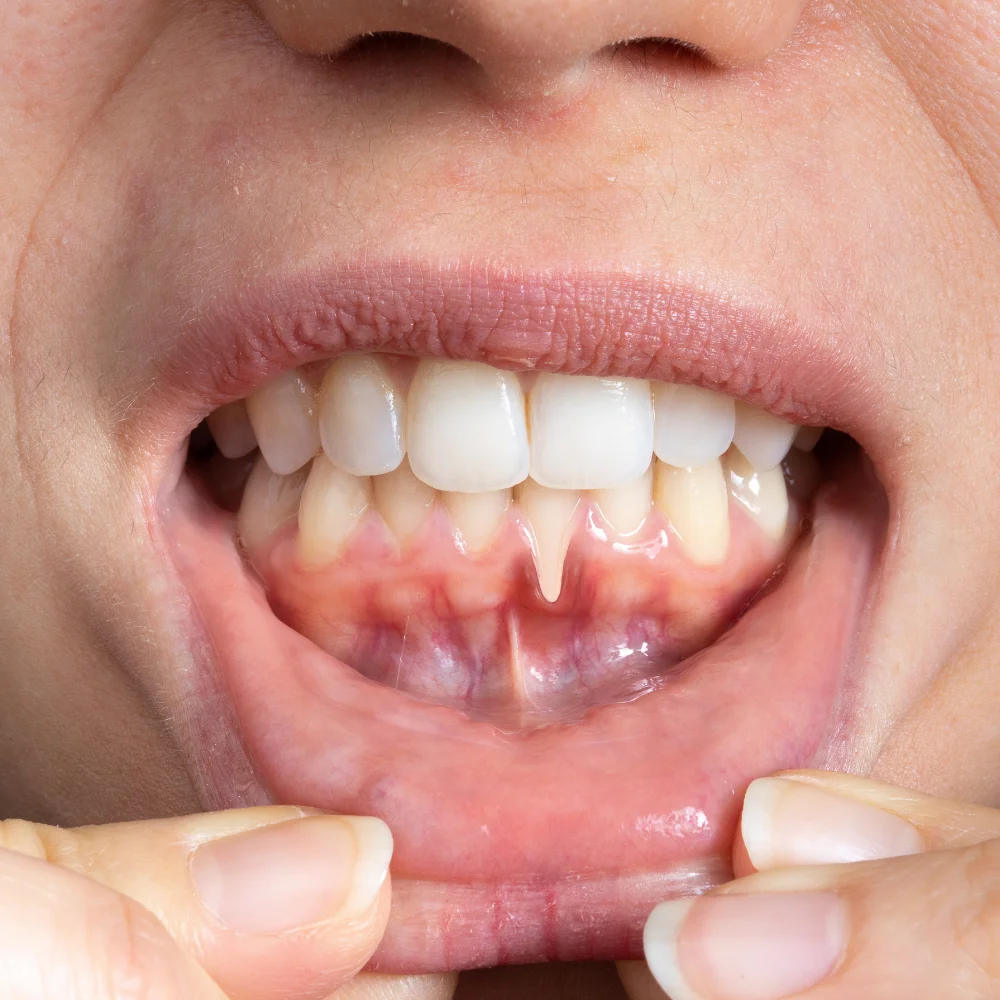
Gingivitis vs. Periodontitis: What Changes
Gum disease isn't one thing — it's a range, and where you fall on it matters a lot. It usually starts as gingivitis, the early, mild stage. Plaque builds up along the gumline, the gums get red and puffy, and they bleed a bit when you brush or floss. The good news about gingivitis is that it's reversible. With a professional cleaning and a solid routine at home, gums can settle right back down to healthy.
Left alone, gingivitis can advance to periodontitis. Now the infection has moved below the gumline and started to break down the bone and fibres that support your teeth. Pockets form between gum and tooth, trap more bacteria, and over time teeth can loosen or shift. Periodontitis isn't something we can undo, but it is something we can manage — the goal becomes stopping the damage and keeping what you have healthy for the long term.
Your gums are connected to the rest of you, as well. Research has linked the inflammation and bacteria tied to gum disease with conditions elsewhere in the body, including cardiovascular disease, diabetes, and respiratory problems. Looking after your gums is one practical way of looking after your overall health.
Common Types of Gum Disease
Not all gum disease looks the same. Here's a quick reference for the forms we watch for and treat.
| Condition | What It Involves |
|---|---|
| Gingivitis | The earliest stage of gum disease, marked by redness, swelling, and bleeding gums. It's usually reversible with good oral hygiene and professional cleaning. Caught early, gingivitis can clear up completely. |
| Periodontitis | A more advanced form that damages the soft tissue and bone supporting the teeth. Left untreated, it can lead to tooth loss. Periodontitis calls for professional treatment and ongoing management. |
| Aggressive Periodontitis | A form that progresses rapidly, sometimes in people who are otherwise healthy. It involves fast destruction of gum tissue and bone and needs prompt treatment. |
| Chronic Periodontitis | The most common form, usually seen in adults but possible at any age. Gums and bone break down slowly, leading to progressive tooth loss if it isn't addressed. Consistent periodontal maintenance is key. |
| Necrotizing Periodontal Disease | A severe infection that causes death of gum tissue, tooth ligaments, and bone. It's most often seen in people with systemic conditions such as HIV, malnutrition, or a weakened immune system. |
Signs Your Gums Need Attention
Gum disease is sneaky — it often causes little or no pain in the early stages, which is exactly why it's so easy to miss. If any of these sound familiar, it's worth booking an evaluation with our team.
Catching gum disease early changes everything. Treating it in the gingivitis stage is simpler and more comfortable than waiting until bone loss sets in — and it gives you the best chance of keeping every tooth.
- Bleeding gums — gums that bleed when you brush, floss, or bite into something firm.
- Red, swollen, or tender gums — inflammation is one of the first outward signs of trouble.
- Persistent bad breath — breath or a taste that won't freshen up despite good brushing can point to bacteria below the gumline.
- Receding gums — teeth that look longer over time as the gum pulls back.
- Loose or shifting teeth — movement, or new gaps opening up, as the support around a tooth weakens.
- Discomfort when chewing — soreness while eating can signal that the tissue and bone are struggling.
- Sensitivity to hot and cold — exposed tooth roots from receding gums can make temperature harder to handle.
When gum disease advances far enough that a tooth can't be saved, replacing it with a dental implant may be the next step — which is one more reason to act at the first sign rather than wait.
What Causes Gum Disease
At its root, gum disease comes from plaque — the sticky film of bacteria that forms on teeth every day. Brushing and flossing clear most of it, but any left behind hardens into tartar, which only a professional cleaning can remove. That tartar keeps feeding the bacteria that irritate your gums. Plenty of things tip the odds, too: smoking, diabetes, certain medications, hormonal changes during pregnancy, a family history of gum disease, and simply skipping regular cleanings all raise your risk. Knowing where you stand helps us tailor a plan that fits your life.
How We Treat Gum Disease: What to Expect
Treatment starts with understanding what's going on, then works from the least invasive approach up. For most people, that means a deep cleaning rather than anything dramatic. Here's how it usually unfolds.
Assess & measure
We examine your gums, take digital X-rays, and gently measure the pockets around each tooth to see how deep the disease goes.
Scaling & root planing
A deep cleaning below the gumline. We remove plaque and tartar, then smooth the tooth roots so gums can reattach. The area is numbed so you stay comfortable.
Targeted therapy
If a few spots need extra help, we may use localized treatment. More advanced cases can be referred on for further care when that's the right call.
Maintenance
We set you up on a cleaning schedule — often every three to four months — to keep pockets shallow and catch any flare-ups early.
Most gum disease is managed comfortably without surgery, especially when it's caught before major bone loss. We'll always walk you through what we're seeing in plain language and talk through the options before anything begins.
Keeping Gum Disease From Coming Back
Once your gums are healthy again, the work shifts to keeping them that way. Periodontitis tends to return if the deeper cleanings stop, so periodontal maintenance — cleanings more frequent than the standard six months — becomes part of your routine. It's not complicated, just consistent. A few habits carry most of the weight:
- Brush twice a day — two full minutes, with a soft-bristled brush, angled toward the gumline.
- Floss daily — this is where gum disease is won or lost, since it reaches where a brush can't.
- Keep your maintenance visits — regular cleanings clear the tartar that home care can't, before it causes damage.
- If you smoke, consider cutting back — it's one of the strongest things you can do for your gums.
- Flag health changes — new medications, pregnancy, or a diabetes diagnosis can all affect your gums, so let us know.
Why Choose Hanlon Creek Dental in Guelph
Gum care isn't a one-and-done appointment — it's an ongoing relationship, so it helps to have it close to home with a team you can talk to easily. Our office is right on Scottsdale Drive in Guelph, which makes those regular maintenance visits far easier to keep than a drive to Kitchener or Toronto every few months.
We look after the whole family and speak English, French, Spanish, Portuguese, Arabic, and Vietnamese, so it's easy to ask about your gums in the language you're most comfortable with. Cost matters, too — we accept all major insurance plans, help patients make the most of the Canadian Dental Care Plan where they qualify, and are happy to talk through flexible financing. With extended hours on Wednesdays until 7 pm and some Saturday availability, we try to make fitting in a visit the easy part.
Periodontal Care FAQ
In its earliest stage, yes. Gingivitis can usually be reversed completely with a professional cleaning and good habits at home. Once it advances to periodontitis and the bone is affected, the damage can't be undone — but it can be stopped and managed so your gums stay healthy and stable from there.
We numb the area first, so you should stay comfortable during the deep cleaning itself. Afterward, your gums and teeth may feel a little tender or sensitive for a few days, which usually settles on its own or responds well to over-the-counter pain relief. Most people are surprised by how manageable it is.
Research has connected the inflammation and bacteria involved in gum disease with conditions elsewhere in the body, including heart disease, diabetes, and respiratory issues. Healthy gums won't fix everything else, of course, but keeping gum disease in check is a sensible part of taking care of yourself overall.
It depends on how your gums are doing. Many patients with a history of periodontitis do best on a three- to four-month schedule rather than the usual six months, since more frequent cleanings keep pockets shallow and problems small. We'll recommend an interval based on what we see and adjust it as your gums improve.
Book Your Gum Health Visit
If your gums bleed, feel sore, or just don't seem right, the easiest next step is a conversation. The sooner gum disease is caught, the simpler it is to treat — and the more of your natural smile you get to keep. Call Hanlon Creek Dental at (548) 855-0283 or email admin@hanloncreekdental.com to book your gum health visit, right here in Guelph.