
What Are Dental Bridges?
A dental bridge does exactly what the name suggests – it bridges the gap left by one or more missing teeth. It's a custom-made restoration, with one or more artificial teeth (called pontics) held in place by crowns on the teeth beside the gap, or by dental implants. Once it's in, a bridge is fixed in your mouth, so it doesn't come out for cleaning the way a partial denture does.
Losing a tooth changes more than your smile. It can make certain foods harder to chew and, over time, let the neighbouring teeth drift into the empty space. A bridge fills that gap so you can bite and speak comfortably again, keeps the surrounding teeth where they belong, and helps your face keep its natural shape. With good daily care, a bridge can serve you well for many years.
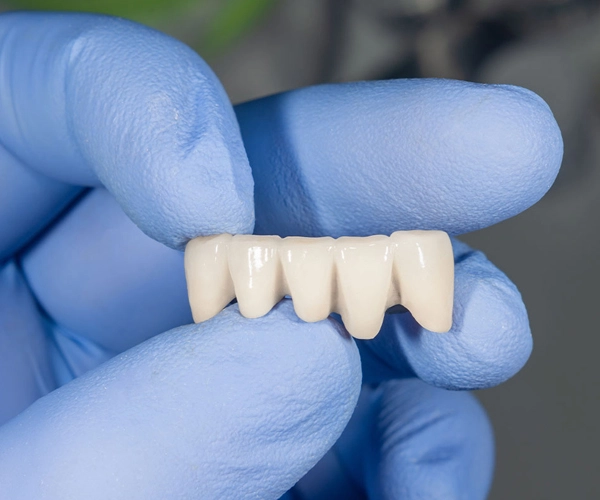
When a Dental Bridge Might Help
People come to us for a bridge for a handful of common reasons. It may be the right fit if you're dealing with any of these:
- One or more missing teeth — a bridge replaces a single gap or a short run of neighbouring gaps.
- Teeth starting to shift — filling the space stops the remaining teeth from tipping or drifting out of line.
- Trouble chewing or speaking — restoring the tooth brings back a fuller bite and clearer speech.
- Changes to your face shape — a gap can let the cheek sink slightly; a bridge helps support the natural contour.
- Tired of a removable partial — many people prefer a fixed bridge they don't have to take out each night.
A bridge isn't the answer in every case – if there's decay or gum disease around the gap, we'll treat that first, because healthy teeth and gums are what hold a bridge in place. At your consultation we'll take a good look and tell you honestly whether a bridge or another option suits you better.
Types of Dental Bridges
There's more than one way to build a bridge, and the right choice depends on where the gap is and what's holding it on either side. Here are the four main options, and we'll walk you through which one makes sense for your situation.
| Bridge type | How it works | Often used when |
|---|---|---|
| Traditional | A pontic sits between two crowns, one on each natural tooth either side of the gap. This is the most common design. | You have healthy teeth on both sides of the gap. |
| Cantilever | The pontic is supported by a crown on just one side, rather than anchored at both ends. | There's a suitable tooth on only one side of the gap. |
| Maryland | A resin-bonded bridge that attaches the pontic using thin metal or porcelain wings behind the neighbouring teeth, so less enamel is adjusted. | Replacing a front tooth where a conservative approach is preferred. |
| Implant-supported | The bridge is anchored to dental implants placed in the jaw instead of resting on natural teeth. | Several teeth are missing, or you'd rather not crown the neighbouring teeth. |
What to Expect: The Bridge Process
For a traditional bridge, most people are looking at two appointments a couple of weeks apart while the lab crafts the final piece. An implant-supported bridge takes longer, since the implants need time to fuse with the bone first. Here's how a typical tooth-supported bridge comes together:
Consultation & exam
We check the teeth and gums around the gap, take X-rays, talk through the bridge types, and sort out your coverage before anything begins.
Preparing the teeth
The abutment teeth are gently shaped so the crowns fit over them. You're numbed for this, and we fit a temporary bridge to wear in the meantime.
Impressions & fabrication
We take a mould (or a digital scan) and a dental lab builds your bridge to the exact shape and shade we agreed on.
Fitting & bonding
We check the fit, colour, and bite, make any small tweaks, then cement the finished bridge securely in place.
You may notice the new bridge for a few days as your tongue and cheeks get used to it – that settles quickly. Because the abutment teeth are reshaped to hold the crowns, a bridge is a long-term commitment for those teeth, and we'll make sure you understand that before we start.
How Long Do Dental Bridges Last?
A bridge isn't permanent, but it's built to last for the long term. With good care, most bridges hold up for 5 to 15 years, and often longer. What makes the biggest difference is the health of the teeth and gums underneath – so daily brushing and flossing, plus regular checkups, are what keep a bridge going strong.
Caring for Your Bridge
Looking after a bridge isn't complicated, but there's one twist: you need to clean underneath the pontic, where a normal thread of floss can't reach. A few simple habits will protect both the bridge and the teeth holding it up:
- Brush twice a day — pay attention to the gumline around the crowns, where plaque likes to gather.
- Clean under the bridge — a floss threader or a small interdental brush slides beneath the pontic to keep the gum healthy.
- Ease up on very hard foods — ice, hard candies, and using your teeth to open things can loosen or chip a bridge.
- Keep up your checkups — regular visits let us spot early wear or a bit of decay on an abutment tooth before it becomes a bigger job.
Bridge or Implant? What to Weigh
For a single missing tooth, a bridge and an implant are both worth considering, and patients often ask how they compare. A traditional bridge is usually quicker, often costs less up front, and involves no surgery – the trade-off is that the healthy teeth either side need to be crowned to carry it. An implant stands on its own in the jawbone, so the neighbouring teeth are left untouched and the bone is helped to stay put, but it's a longer process and depends on having enough healthy bone. We offer both here in Guelph and will lay out the pros and cons for your situation so the choice feels clear.
Who Is a Good Candidate for a Bridge?
Most people missing one or a few teeth are candidates for a bridge, but a short exam is the only way to be sure. Here's what we look at:
- Healthy neighbouring teeth — the abutment teeth beside the gap need to be sound enough to support the crowns and the bridge.
- Enough jawbone — if you're leaning toward an implant-supported bridge, there needs to be enough bone to anchor the implants; a graft is sometimes an option if not.
- Healthy gums — treating any gum disease first gives the bridge a stable foundation to last.
- Good overall health — conditions that slow healing, such as uncontrolled diabetes, can affect the plan, so it's worth mentioning your health history.
Cost & Insurance
What a bridge costs depends on the type you choose, the materials, and how many teeth you're replacing, so we give you a clear estimate after the exam rather than a guess over the phone. Because bridges are considered a major restorative treatment, many dental plans cover part of the cost – though how much varies from one policy to the next.
Our team is happy to help you make sense of your benefits before you commit to anything. We accept all major insurance plans and direct bill where we can, we can help with claims through the Canadian Dental Care Plan (CDCP) if you're covered, and we're glad to talk through flexible payment options so cost isn't what stands between you and a complete smile.
Why Choose Hanlon Creek Dental in Guelph
Replacing a tooth usually means a few visits – a consultation, the fitting, and follow-ups – so it helps to have it done close to home rather than driving to Toronto or Kitchener. Our office is right on Scottsdale Drive, and we build our schedule around busy lives, with extended Wednesday hours until 7 pm and some Saturday availability.
We look after the whole family and speak English, French, Spanish, Portuguese, Arabic, and Vietnamese, so you can ask questions in the language you're most comfortable with. From your first consultation to the day your bridge is fitted, our team focuses on clear answers and care that fits you.
Dental Bridges FAQ
A dental bridge is a custom-made restoration that replaces one or more missing teeth. It uses artificial teeth called pontics, held in place by crowns on the teeth next to the gap or by dental implants. A bridge restores your ability to chew and speak comfortably, helps keep your face's natural shape, and stops the remaining teeth from drifting into the empty space.
Bridges aren't considered permanent in the sense of lasting a lifetime without any repair or replacement, but they're a long-term solution. With proper care they typically last 5 to 15 years, and sometimes longer. Regular checkups and good daily hygiene make a real difference in how long a bridge holds up.
Brushing and flossing as usual takes care of the crowns, but you'll also want to clean beneath the pontic where regular floss can't reach. A floss threader or a small interdental brush does the job in seconds. Keeping that area clean protects the gum and the teeth supporting the bridge, which is what helps it last.
Both can replace a missing tooth well, and the right choice depends on your situation. A bridge is often quicker and less expensive up front and avoids surgery, but the neighbouring teeth need to be crowned. An implant leaves those teeth untouched and helps preserve the jawbone, though it takes longer and needs enough healthy bone. We offer both and will walk you through which one suits you.
Coverage varies from plan to plan. Because bridges are usually classed as a major restorative procedure, many plans cover a portion of the cost, with the exact amount depending on your policy, the type of bridge, and the materials. Our team can help you review your benefits, including CDCP coverage, and sort out claims before treatment begins.
Schedule Your Dental Bridge Consultation
If you've been living with a gap and you're ready to do something about it, the easiest first step is a conversation. Call us at (548) 855-0283 or book online, and we'll take a look, explain your options in plain language, and help you decide what's right – no pressure. Come see our team here in Guelph and take the first step toward a complete, comfortable smile.