
What a Root Canal Actually Does
A root canal treats the inside of a tooth, not the outside you can see. Past the enamel and the hard dentine, every tooth has a soft core called the pulp – a mix of nerves and blood vessels that kept the tooth alive as it grew. When a deep cavity, a crack, or a knock during a hockey game lets bacteria reach that core, the pulp gets infected and inflamed. That's usually when the ache starts, and left alone the infection can spread down the roots and form an abscess.
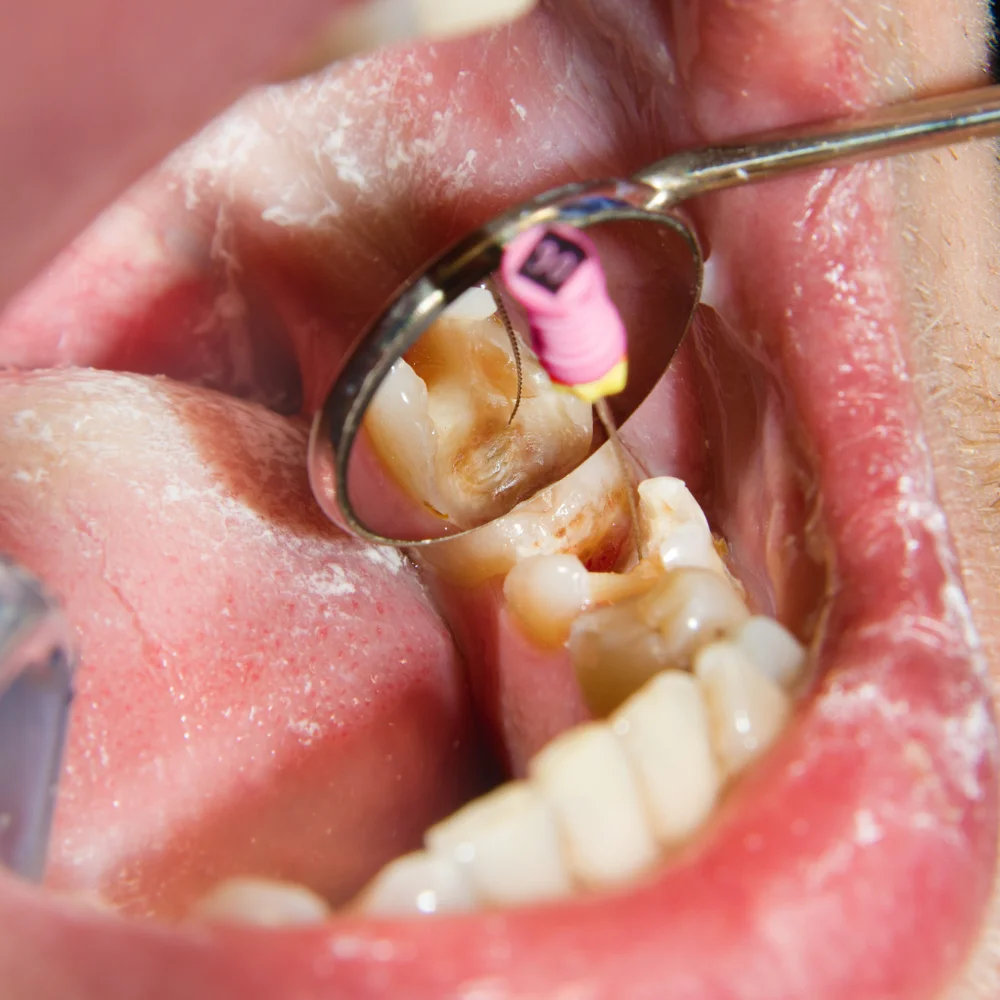
Root canal treatment clears out the infected pulp, disinfects the narrow canals it leaves behind, and seals them so bacteria can't move back in. The outer tooth – the part you chew and smile with – stays right where it is. A fully grown tooth doesn't need its pulp to survive, which is why we can remove it and keep the tooth you'd otherwise lose.
Does a Root Canal Hurt?
This is the question almost everyone asks first, and it's a fair one. Here's the honest version: the pain people dread is the infection, not the treatment. By the time a tooth needs a root canal, it often already hurts – and the appointment is what turns that off.
The old horror stories come from an era before modern anaesthetic. Today the tooth and the area around it are fully numbed before we begin, so what you feel is mostly pressure and vibration – similar to having a filling done. Most people are surprised by how ordinary it turns out to be, and relieved to have the throbbing gone.
Signs You Might Need One
A root canal isn't always announced by a toothache. Symptoms vary, and some teeth quietly go bad without much warning at all. Still, a few signals are worth paying attention to:
- Lingering sensitivity — hot coffee or cold water sets off a jolt that hangs around after you've swallowed.
- Pain when you bite — a specific tooth aches under pressure or feels tender when you chew on it.
- A tooth that's changed colour — darkening or greying can mean the pulp inside has died.
- Swelling or a tender gum — puffiness near the tooth, sometimes coming and going.
- A recurring "pimple" on the gum — a small bump that drains and returns is often a sign of infection underneath.
Because a dead or dying tooth doesn't always send up a flare, a regular exam and X-ray can catch trouble early – often before it turns into a middle-of-the-night problem.
Save the Tooth, or Pull It?
When a tooth is badly infected, you've really got two roads: treat it and keep it, or remove it and replace it later. Pulling a tooth can look cheaper in the moment, but the gap it leaves rarely stays a gap – neighbouring teeth drift, the bite shifts, and you're usually looking at an implant or bridge down the line. Here's how the two compare.
| Root canal + crown | Extraction | |
|---|---|---|
| Your natural tooth | Kept in place | Removed for good |
| Chewing | Feels and works like your own tooth | Gap affects biting until it's filled |
| Nearby teeth | Stay put | Can tilt or shift into the space |
| What comes next | A crown, then routine care | Often an implant or bridge to fill the gap |
| Longer-term cost | One treatment plus a crown | Extraction plus the replacement later on |
There are times when a tooth is too far gone to rescue, and we'll tell you honestly if that's the case. But when a root canal is an option, keeping your own tooth is usually the more straightforward path.
What Happens During Treatment
Depending on the tooth, treatment takes one or two visits. Front teeth have a single canal and go quickly; molars have more canals and take a little longer. Here's the shape of it from the chair.
Numb and check
We freeze the tooth and the gum around it, then confirm you're fully numb before anything starts. A thin rubber sheet keeps the tooth clean and dry while we work.
Open and clear
Through a small opening in the top of the tooth, the infected pulp is removed from the chamber and the root canals below it.
Clean and shape
Each canal is cleaned, disinfected, and shaped so nothing is left behind for bacteria to feed on.
Fill and seal
The canals are filled with gutta-percha, a rubbery material that seals the space, and the opening is closed with a filling.
The Crown That Comes Afterward
A tooth that's had a root canal is a little more brittle than it used to be – the pulp that once nourished it is gone, and a good deal of tooth structure was lost to the decay or crack in the first place. Back teeth take a lot of force when you chew, so most of them need a crown afterward to hold everything together.
The crown fits over the treated tooth like a snug cap, restoring its full strength and shape. It usually goes on within a few weeks, once the tooth has settled. Until it's placed, chew on the other side and go easy on that tooth so it doesn't chip. Front teeth with plenty of remaining structure can sometimes get by with a filling instead, and we'll talk through what your tooth needs.
Healing and Aftercare
Recovery is usually gentler than people brace for. Most patients head back to work or school the next day. A few pointers for the first stretch:
- Expect mild tenderness — the tooth may feel a bit sore for a couple of days; over-the-counter pain relievers typically handle it.
- Go soft at first — stick to softer foods for a day or two and let the area calm down.
- Favour the other side — avoid chewing on the treated tooth until the crown is on.
- Keep it clean — brush and floss as normal; the treated tooth is cared for just like the rest.
Call us if soreness climbs instead of easing, or if swelling appears – that's not the usual course and we'll want to take a look. With a crown and everyday care, a treated tooth can keep doing its job for many years.
Cost and Insurance in Guelph
What a root canal costs depends mostly on which tooth is involved. Front teeth have one canal and sit at the lower end; molars have several and take more time, so they cost more. The crown afterward is a separate part of the plan, and we'll give you the full picture up front.
We accept all major dental insurance plans and are glad to help you sort out your coverage before treatment starts. Our team at 649 Scottsdale Drive also works with patients on the Canadian Dental Care Plan (CDCP) – depending on your household income, that federal program may cover part or all of the cost. If you're paying out of pocket, ask us about spreading it out; saving a natural tooth is almost always easier on the budget than replacing one.
In Pain Right Now?
Severe tooth pain doesn't keep office hours, and it's one of the things we try hardest to see quickly. If a tooth is throbbing, call us at (548) 855-0283 and we'll try to fit you in the same day. Getting seen sooner also gives the tooth a stronger chance of being saved.
While you wait, an over-the-counter pain reliever and a cold compress against the outside of your cheek can take the edge off. Try to steer clear of very hot or very cold food and drink, and chew on the other side until we can look at it.
Why Have Your Root Canal Done in Guelph
When a tooth is already sore, the last thing you want is a drive to Toronto or Kitchener on top of it. Having treatment close to home means the appointment, the crown fitting, and any follow-up all happen minutes away. We look after families from Hanlon Creek to Exhibition Park, Kortright Hills, and Clairfields, and we know many patients are juggling work at the University of Guelph or a commute.
Wednesdays we're open until 7 pm and we keep some Saturday hours, which helps when a tooth acts up and you can't easily step away from work. Our team also speaks English, French, Spanish, Portuguese, Arabic, and Vietnamese, so you can talk through your treatment in the language you're most comfortable with. There's parking right at the door.
Root Canal FAQ
The tooth and the gum around it are fully numbed first, so during treatment you mostly notice pressure, much like a filling. The pain people link to root canals is usually the infection beforehand, and clearing it is what the treatment does. Mild tenderness for a day or two afterward settles with over-the-counter pain relief.
Common signs are lingering sensitivity to hot or cold, pain when you bite down, a darkening tooth, gum swelling, or a small recurring bump on the gum. Some infected teeth cause little discomfort, so an exam and X-ray are the reliable way to know for sure.
When a root canal is possible, keeping your own tooth is usually the more sensible choice. An extraction leaves a gap that nearby teeth drift into and typically leads to an implant or bridge later. If a tooth is too damaged to save, we'll be straight with you about it.
A treated tooth is more brittle and has often lost structure to decay or a crack, so back teeth in particular need a crown to restore full strength and prevent fractures. Some front teeth with enough structure left can be restored with a filling instead.
Root canals are generally considered a necessary restorative treatment, so many dental plans cover a portion. If you qualify for the Canadian Dental Care Plan, it may cover part or all of the cost depending on your household income – we're happy to help you check.
Taking the Next Step
If a tooth is aching or you've been told you need a root canal, treating it sooner improves the odds of keeping the tooth. Reach us at (548) 855-0283 or admin@hanloncreekdental.com to book, and we'll explain what's going on in plain language and get you back to eating and sleeping comfortably.