
What Is Preventative Dentistry?
Preventative dentistry is simply the care that keeps small problems from becoming big ones – regular cleanings, exams, and a few daily habits that stop trouble before it starts. Your morning brushing matters, but it only goes so far on its own. This is the other half of the equation.
Here's why it works. A cavity caught early is a quick filling; left alone, that same tooth can end up needing a crown, a root canal, or an extraction. Decay and gum disease are usually quiet until they aren't, so regular visits let us spot changes while they're still easy to deal with – which almost always means less time in the chair, less discomfort, and less money out of pocket.
Prevention is the least expensive dentistry there is. A filling costs less than a crown, and a crown costs less than losing a tooth and replacing it. Staying ahead of problems is the whole point.
At Hanlon Creek Dental, our office is right here on Scottsdale Drive in Guelph, so keeping up with routine care doesn't mean rearranging your week. Dr. Mina Mustafa and our team look at the whole picture – your dental history, your risk factors, your daily habits – and build a plan that actually fits your mouth, not a generic checklist.
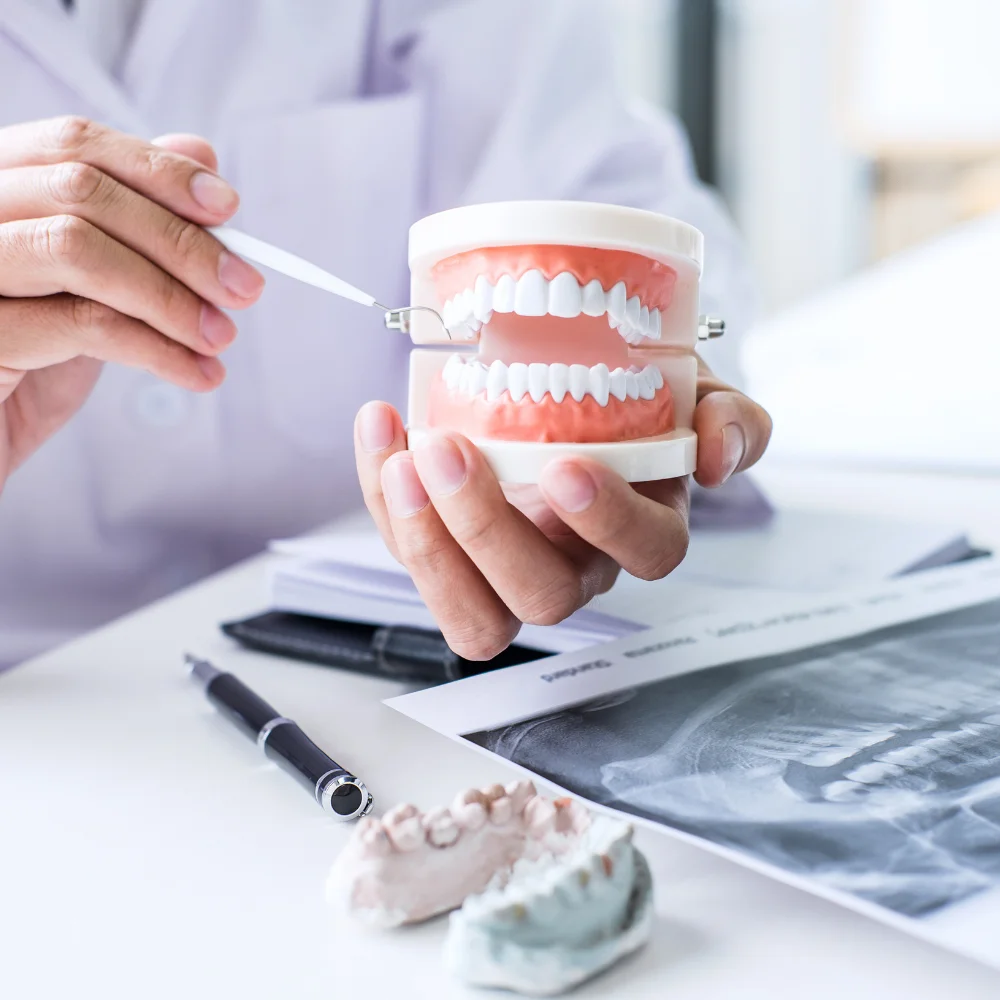
What Preventative Care Includes
Prevention isn't one thing – it's a handful of small measures that work together, some in the office and some at home. Here's what your care may involve:
- Professional cleanings — our registered dental hygienists clear away plaque and hardened tartar your brush can't reach.
- Comprehensive exams and digital X-rays — a close look at teeth, gums, and bite, with imaging when we need to see below the surface.
- Fluoride treatments — a quick boost that helps strengthen enamel against decay.
- Dental sealants — thin protective coatings for the grooved back teeth that are hardest to keep clean.
- Gum health monitoring — checking for early gum disease so we can treat it before it spreads.
- Oral cancer screenings — a brief check of your mouth, throat, and neck at every exam.
- Custom night guards and sports guards — to protect teeth from grinding at night or impacts on the field.
Preventive Services and How Often You Need Them
One of the most common questions we hear is, "How often should I actually be coming in?" It depends on your mouth – healthy gums and low decay risk mean fewer visits than being prone to cavities or gum trouble. The table below gives a general sense of what each service does and a typical timeline; we'll fine-tune the specifics for you.
| Preventive service | What it does | How often |
|---|---|---|
| Checkup & cleaning | Removes plaque and tartar, and reviews your overall oral health | Usually every 6 months; more often if you're at higher risk |
| Dental exam | Checks teeth, gums, bite, and soft tissues for early changes | At each regular visit |
| Digital X-rays | Reveals decay and issues hiding between teeth or below the gumline | Periodically, based on your needs |
| Fluoride treatment | Strengthens enamel and helps repair early damage | Often at cleaning visits, especially for higher-risk patients |
| Dental sealants | Seals the grooves of back teeth against food and bacteria | Once applied; checked and reapplied if worn |
| Oral cancer screening | Looks for unusual changes in the mouth, throat, and neck | At every exam |
What Happens During a Checkup
If it's been a while since your last visit, it helps to know what to expect. A routine appointment is straightforward and usually takes under an hour. Here's how a typical checkup and cleaning goes:
Review & X-rays
We catch up on any changes to your health and take digital X-rays when they're needed to see between and below the teeth.
Professional cleaning
Your hygienist removes plaque and tartar, then polishes your teeth so they feel smooth and fresh.
Exam & screening
Dr. Mustafa checks each tooth, your gums, and your bite, and does a quick oral cancer screening of your mouth and neck.
Plan & next steps
We talk through what we found in plain language, answer your questions, and set the right timing for your next visit.
Cleanings, Fluoride, and Sealants
Your toothbrush does good work, but it can't reach everywhere. A professional cleaning is a bit like a detail job for your mouth – our hygienists clear the tartar and plaque that build up in spots a brush can't get to, especially along the gumline and between teeth.
Fluoride and sealants add another layer. Fluoride helps repair early damage and makes enamel more resistant to the acids that cause cavities, and a professional treatment is more concentrated than what's in your toothpaste. Sealants tackle a different weak point: the grooves on back teeth that trap food no matter how carefully you brush. A thin coating smooths those grooves out. Kids benefit the most, but plenty of adults are good candidates too.
Watching Your Gums and Screening for More
Your gums are the foundation your teeth stand on, so we keep a close eye on them. Early gum disease, called gingivitis, often shows up as a little bleeding when you brush or floss. Caught early, it's very treatable – which is why we check your gum health at every visit and adjust your home routine as needed.
Exams do more than find cavities, too. Oral cancer affects thousands of Canadians each year, and early detection makes a real difference. That's why Dr. Mustafa includes a quick screening of your tongue, cheeks, throat, and neck at every exam – it only takes a couple of minutes. Because a dentist sees the whole mouth up close, routine visits are sometimes where the first signs of other health conditions show up as well.
Guards for Grinding and Sports
A lot of people grind or clench their teeth in their sleep without realizing it. Over time that habit – called bruxism – wears teeth down and can leave your jaw sore in the morning. A custom-fitted night guard cushions your teeth and jaw joints while you sleep and heads off damage that gets expensive to repair. If you wake up with a tight jaw or notice your teeth flattening, mention it to us.
Active families need protection of a different kind. If you or your kids play contact sports, a custom sports guard shields teeth from a stray elbow or puck far better than a bulky boil-and-bite version from the store, because it's shaped to fit your mouth.
Habits That Keep Your Smile Healthy
Most of prevention happens between visits. The good news is the daily basics aren't complicated, and small tweaks add up over the years:
- Brush twice a day — two minutes each time, with a fluoride toothpaste, to clear plaque before it hardens into tartar.
- Floss once a day — it cleans between teeth where a brush can't reach. It feels awkward at first and gets easier fast.
- Go easy on sugar and acid — they feed the bacteria behind cavities, so having sweets with a meal beats sipping or snacking all day.
- Rinse with water — a quick swish after something sweet or acidic helps neutralize the acids on your teeth.
- Keep your regular visits — steady checkups are how we catch the things you can't see or feel yet.
At your appointments we're happy to show you brushing and flossing techniques suited to your mouth, and to talk through any habits that might be working against you.
Why Choose Hanlon Creek Dental in Guelph
Routine care is easiest to keep up with when it's close to home. Our office is right here in Guelph, so cleanings and checkups fit around work and school without a drive out of town. We see the whole family, and our team speaks English, French, Spanish, Portuguese, Arabic, and Vietnamese, so you can ask questions in the language you're most comfortable with.
We also try to make scheduling and cost work for real life. Extended Wednesday hours until 7 pm and some Saturday availability help with busy weeks. We accept all major dental insurance plans, welcome the Canadian Dental Care Plan (CDCP) for eligible patients, and offer flexible payment options so prevention stays manageable for every family.
Preventative Dentistry FAQ
For many people, every six months works well, but it really depends on your mouth. If you're prone to cavities or gum issues, we may suggest coming in more often; if your risk is low, your schedule might be a little more relaxed. We'll recommend a timing that fits your situation at your visit.
Generally, yes. Catching a small cavity early means a simple filling instead of a crown or root canal later on. Regular cleanings and exams are far less costly than treating problems that have had time to grow, so staying consistent tends to pay off over the long term.
Digital X-rays use a low level of radiation and are a routine part of dental care. We only take them when they'll actually help – for example, to check for decay between teeth or below the gumline that we can't see during a visual exam.
Both can benefit adults, not only children. Fluoride helps anyone at higher risk of decay, and sealants can protect adult back teeth with deep grooves. We'll let you know whether they make sense for you based on your exam.
Routine cleanings and exams are among the services most dental plans cover, though the details vary. We accept all major insurance plans and the Canadian Dental Care Plan for eligible patients, and our team is glad to help you understand your coverage before your appointment.
Start Your Prevention Plan
Every mouth is different, so every prevention plan should be too. We'll build one around your risk factors, your history, and your goals – whether that means more frequent cleanings, added fluoride, or a night guard to protect your teeth while you sleep. Call us at (548) 855-0283 or email admin@hanloncreekdental.com to book your preventative dentistry appointment in Guelph.